Introduction
Background
When someone plans to purchase a car, one of the primary considerations is the perception of the car brand. All cars perform the primary function of facilitating the movement of persons and goods from one physical location to another. However, some car brands have gained a reputation for being superior at performing these tasks compared to others.
Jobber and Ellis-Chadwick (2020) explain that factors such as safety, performance, convenience, design, quality, value, environmental friendliness, style, and innovativeness are among the factors that influence one’s perception. The decision-making process of a car buyer is often defined by the above factors. An individual would want to purchase a reliable car that does not break down easily, is easy to repair and maintain, and offers the best safety standards when in use.
Perception in this context refers to how a given thing is regarded, interpreted, or understood by a specific audience. Perception is one of the most defining factors when one is purchasing a car. A car brand such as Toyota is associated with low maintenance costs and efficiency. Mercedes-Benz, Porsche, and Audi are renowned for their association with comfort and safety. Then there are the luxury car brands such as Lexus, Lamborghini, Ferrari, Bentley, Rolls-Royce, and Jaguar, among others (Xu & Fan, 2019).
The perception that people have towards these cars has developed over a long period. This perception is shaped by the actual value that these brands offer, their market positioning, and emerging industry trends. For instance, Tesla is gaining massive popularity in the market not only because of its unique design, high speed, and safety standards but mainly because it is an electric car that does not emit carbon into the environment (Penmetsa et al., 2019). It is perceived as a futuristic car, carving out a niche in the highly competitive market.
The perception of car brands in the United Kingdom market influences the purchasing patterns of consumers, just as it does in other markets around the world. A survey conducted by Armstrong (2018) identified the 10 most important factors to consider when purchasing a car in the UK. In order of priority, they included price, fuel economy, performance, safety, manufacturer, engine size, size, quality, design, and color. Consumers take these factors into consideration when planning to purchase a car. The car manufacturer (brand) is a critical factor that consumers take into consideration. Fill and Turnbull (2019) explain that specific brands are associated with unique quality specifications based on the perception that has been developed in the market.
Problem Statement
The car industry has been growing rapidly, and individual car manufacturers are keen not only to expand their market share but also to protect the current market share they control. The problem is that it may not always be easy to change consumers’ perceptions. Masterson, Phillips, and Pickton (2021) explain that it is easier to convince consumers that a once-valued brand has become less valuable than it is to convince them that a less-valuable brand is now of great value.
For instance, Fiat and Nissan are some of the least desirable car brands in the UK (Nunan, Birks, and Malhotra, 2020). Nissan has been keen on developing unique cars that match the performance and reliability of top brands in the market. However, changing the perception of customers in this market remains a major challenge.
Building a desirable perception for a car brand takes time and resources. Paul (2018) explains that spending time on research and developing a unique product in the market is not enough. One will still require spending a significant amount of money on promotional campaigns to influence customer perception. Having a negative perception of a car brand may be influenced by factors such as poor braking systems, susceptibility to fire outbreaks, and an inability to adapt to changing market trends.
A report by Herrmann (2018) indicates that Toyota was compelled to recall more than 2 million Prius and Auris cars worldwide, including those in the UK, due to a stalling issue that occurred even at high speeds. Although the company failed to release the record of the number of accidents caused by the problem, it admitted that such a fault could cause a major accident if it were to happen while driving at a higher speed. The recall and revelation of the problem had a major negative impact on the company’s image in the hybrid car market.
When such a negative perception is created, it becomes a significant challenge for the car to gain trust. Jobber and Ellis-Chadwick (2020) observe that although such recalls often demonstrate a firm’s commitment to the quality and well-being of its customers, rather than profits, they also create doubt about the quality of the product. Some clients would just switch to alternative products known to offer the best value. Such trends are not unique to the UK, as other markets around the world also respond similarly. These car manufacturers need to make deliberate efforts to influence the perception that their customers have towards their brand, as it significantly influences their buying decisions.
When defining the perception of customers towards a car brand, one of the factors that car manufacturers would consider is the purchasing power of customers. This remains a significant factor that these firms must consider (Masterson, Phillips, and Pickton, 2021). For instance, a consumer in the lower middle class who has limited resources to spend on a car would prioritize the cost of buying a car, the cost of running and maintaining it, and reliability. These are the factors that would define their perception of the car brand. The upper middle class will take into consideration the comfort, safety, and maintenance cost of the car when defining their perception of the car.
On the other hand, the rich consider the class of the car, in addition to all other basic factors discussed above. They want a car that reflects their social status, even if it means paying more for it (Armstrong, 2018). As such, leading car manufacturers must understand their target customers before trying to influence their perceptions. Using theoretical models, such as Maslow’s hierarchy of needs, discussed in detail in the literature review, can aid in developing effective target market strategies.
Significance of the Study
The United Kingdom is one of the world’s leading car markets. It is also home to some of the world’s leading car manufacturers. Factors in the car market within the same consumer segment can vary greatly across different geographies.
For example, one of the main factors that can vary is consumer preferences. In North America and Europe, customer perceptions of a car are primarily defined by factors such as comfort, safety, reliability, and environmental friendliness. Meanwhile, car consumers in Asia may prioritize features such as advanced technology and spacious interiors.
Another factor that can vary is the economic conditions in the region. Even within the same consumer segment, economic conditions can have varying impacts on the car market in different regions. For instance, in regions with a strong economy and high purchasing power, such as the UAE, Oman, Saudi Arabia, and Qatar, consumers may be more willing to pay a premium for luxury vehicles. In contrast, in a region with a weaker economy, such as African markets, consumers may be more price-sensitive and opt for more affordable vehicles.
This paper is crucial to car manufacturers in the UK and worldwide. It explains specific factors that directly influence the demand for these products in the market. According to Morganti and Browne (2018), companies spend millions of pounds promoting their product locally and internationally. However, sometimes such heavy expenditure on promotion fails to translate into increased sales.
One reason for such failures is a firm’s inability to understand the specific needs of its customers. For instance, one needs to have a means of moving from one location to another, especially in rural areas where public transport may not be reliable (Liu, Nikitas, and Parkinson, 2020). It means that people will find cars that meet their budget, whether for the middle to lower class or to demonstrate their status in society, for the rich.
The perception that one has towards a product is directly influenced by one’s social status. While the rich will be influenced by factors such as the comfort and class of the car, the lower-middle-income earners are primarily focused on the cost and convenience of the car, as depicted above. It means that marketers have the responsibility of segmenting their customers by class and country.
In the UK, for instance, even the lower middle class is concerned about the environment. It means that after factoring in the cost and reliability of the car, the client will focus on how the car affects the environment. Similarly, the rich will also consider the impact of the product on the environment when class needs have been met.
This study explains how these factors can be identified and then used to define product propositions in the market. Chaffey and Ellis-Chadwick (2019) caution that it is perilous for a brand to promise something it cannot deliver. This is so because once the promise is made, it defines the expectations of clients.
Once the product is delivered and consumed by a client, they will classify it as one that failed to meet their needs, one that met their needs, or one that exceeded their expectations. When expectations are not met, a client becomes dissatisfied, and their perception of the product becomes negative. However, a product that exceeds customer expectations tends to earn a favorable perception.
This study is particularly important to car manufacturers, especially their sales and marketing teams, when making decisions related to customer management. When discussing the perception of car brands, scientists explain that it is not just about the perception that one individual has. Instead, it refers to the perception that has developed among a significant section of the market.
When an individual plans to buy a car, regardless of their social status, they will likely consult widely with friends and family. Although they may have their own personal opinions about what is available in the market, they will still conduct these consultations. Mostly, a final choice is based on the two sides of opinions, including a personal one and those of the referent group (Santos & Davies, 2020). They do so to reaffirm their perception and to ensure that they do not regret their decisions (Nunan, Birks, and Malhotra, 2020). As such, when a car brand has a generally negative perception among a significant segment of the market, such consultations may reaffirm a buyer’s decision to avoid a specific brand.
Aim and Objectives
The primary aim of this research is to investigate perceptions of car brands in the UK and compare them with perceptions internationally. It is known that these perceptions often define the decision-making process of buyers. The study will investigate factors that define this perception locally and compare them with those in the international market. As such, this study shall help car manufacturers define their strategies when positioning their products.
Research Questions
The following are the specific questions that will guide the data collection process from the participants.
- What are the factors that define perceptions of car brands in the UK market?
- What are the factors that define perceptions of car brands in the global market?
- How does the perception of car brands in the UK compare to that of the international market?
- What is the impact of customers’ perceptions on their buying decisions in the car industry?
- How can companies influence customers’ perceptions as a way of promoting their brand in the market?
Dissertation Structure
This dissertation comprises five chapters that address specific aspects of the study. Chapter One is the introduction, which provides a detailed background of the research, a problem statement, and the significance of the study. The chapter also outlines the aim and objectives of the study, as well as the research questions that guided the data collection process. The second chapter provides a review of the literature to understand what other scholars have found out. It discusses relevant theories that can help in understanding how consumers develop a perception of a given product.
Chapter Three is a detailed discussion of the method used to collect data. This chapter explains the research philosophy, research approach, research design, method of data collection, and analysis of primary data. It also discusses the structure of the instrument used to collect data and the ethical considerations observed in this study.
Chapter 4 presents findings from the analysis of primary data, along with a discussion of data from both primary and secondary sources. The final chapter summarizes the study’s findings and provides recommendations that should be considered by relevant stakeholders. A list of all the secondary materials used in this study is provided on the reference page of the document.
Literature Review
The previous chapter provided the background information on this topic, explaining the aim and objectives that had to be achieved. In this chapter, the focus is on reviewing the existing literature that is related to the topic. According to Aityan (2022), when conducting research, it is essential to acknowledge the work of other scholars in the same field. One needs to review their work to understand their findings. The literature review helps eliminate duplication of already existing knowledge in a particular field.
When reviewing the literature, a researcher can identify existing knowledge gaps. The focus of the study will then be to address the existing gaps. The process also helps to identify contradicting information in the field. By collecting primary data, it becomes possible to explain the inconsistencies and to put into perspective the realities that exist. The chapter also reviews relevant theories that can help explain the process by which people make purchasing decisions based on various factors.
The Growth of the Car Industry
The automotive industry has undergone significant changes as customer tastes and preferences continue to evolve. According to Lucendo (2019), when Karl Benz introduced the first car in Germany in 1886, it was initially perceived as a dangerous locomotive, and it faced resistance from large railway companies that viewed it as a threat. The report showed that the car was simple, designed to facilitate convenient movement from one location to another, and in a manner that could not be achieved using established railway systems. Its price tag meant that it could only be afforded by the very rich members of society. Figure 2.1 illustrates the first car introduced in Germany.

The industry has been significantly growing over the years, and the design of cars has also evolved in response to changing customer tastes and preferences. According to Lucendo (2019), Mercedes-Benz remains one of the most valued car brands in the international market. New segments have emerged to meet the needs of customers across different social classes.
Toyota has gained a reputation as an affordable yet reliable car brand that meets the needs of low-income earners. On the other hand, Bugatti, Ferrari, and Duesenberg are considered one of the most popular luxury car brands (Laurs & Renneboog, 2019). The figure below is a Bugatti, which is one of the fastest and most expensive cars in the world.

As the design engine type and capacity continue to improve, the demand for cars has increased in the global market over the years. According to Moore (2022), the automotive sector accounts for approximately 3% of global GDP, with a larger proportion in emerging nations such as China and India, where the automotive industry contributes 7% to GDP. As shown in Figure 2.3, the market dropped by 0.6% from 2017 to 2022.

The current worldwide market for Automotive Manufacturing is assessed at $2.9 trillion in 2022 and is growing at a rate of 3.1% from 2017 (Moore, 2022). The industry is expected to grow from 2020 to 2030, reaching 122.83 million units by the end of the decade, representing a significant increase from 2020’s 85.32 million units (Moore, 2022). In terms of market size, the automobile manufacturing industry now ranks first among all worldwide manufacturing industries.
Growing Competition and Significance of Branding
Nicholas-Joseph Cugnot is considered the first person to have built a steam carriage, a three-wheeled vehicle designed to facilitate the movement of the French army’s artillery. However, Ackermann (2021) explains that the steamer was slow, just like the one built by Oliver Evans in 1805 for the Department of Health in the City of Philadelphia. It was the Karl Benz model that is largely considered the genesis of the modern car. However, these early inventors did not focus on commercializing their products, and as a result, there was no competition until mass production of cars began in the US in 1896 (Liu, Nikitas, and Parkinson, 2020).
Ransom E. Olds founded the Olds Motor Vehicle Company (later known as Oldsmobile), marking the beginning of mass-produced cars. The company was soon joined by the Thomas B. Jeffrey Company, which produced a car model they referred to as Rambler (Doner, Noble, and Ravenhill, 2021). The two firms started competing for the local market in the United States.
Henry Ford revolutionized the production and commercialization of cars globally. His introduction of the moving assembly lines drastically lowered the unit cost of production and minimized the time it took to make various products available (Liu, Nikitas, and Parkinson, 2020). In Europe, Mercedes-Benz adopted the new production system and began spreading rapidly across the European market. World War I and World War II created a massive market and growth opportunities for the industry, as their products became vital during the wars. The US automobile companies, such as General Motors Corporation, Ford, and Chrysler, emerged as some of the dominant players in the industry.
In Europe, brands such as Volkswagen and Mercedes-Benz of Germany, Peugeot, Renault, and Citroën of France, as well as Rolls-Royce Motor Cars Limited, Aston Martin, Jaguar, and Bentley, are some of the firms that have emerged as dominant players (Korstanje, 2021). In Asia, Japan’s Toyota Motors and Nissan Motor Co. emerged as dominant players. The competition has been getting increasingly stiff over the years. Figure 2.4 shows the current dominant brands in the industry.

The Impact of COVID-19 on the Industry
The outbreak of the COVID-19 pandemic in early 2020 had a significant impact on the global economy, particularly on the automotive industry. The industry had made a full recovery from the 2008 global recession. However, the pandemic reversed most of the gains.
Some of the most attractive car markets in the world, especially Europe, the US, and China, were the worst-affected regions by the pandemic. Bridge (2020) explains that most companies that required physical interaction with employees had to be temporarily closed as a means of managing the spread of the virus. The purchasing power of consumers worldwide also dropped significantly, as many firms were forced to lay off employees or cut their salaries in half.

The figure above illustrates how various markets responded to the pandemic outbreak. The Chinese mainland was the first global market to report a major drop in the early months of 2020. However, it was able to make a recovery by the end of March. The demand for cars then started to increase in April.
In the UK, the impact of the pandemic on the car industry was felt from February, when there was a sharp decline in vehicle sales. It continued until the end of March when recovery was reported. The same trend was observed in the US, although the decline in sales was not as severe as it was in the UK. The European market, like others around the world, experienced a similar decline.
The drop in car sales was caused by factors beyond the decline in consumer purchasing power. According to Korstanje (2021), governments worldwide, including those in the UK, issued travel bans as a means of slowing the spread of the virus. It meant that the number of people moving into and out of a country significantly reduced. Those traveling from one part of the country to the next also dropped significantly.
The situation was exacerbated by the introduction of lockdowns in various parts of the world. For several months, people were forced to stay at home due to the fear of the virus’s rapid spread (Doner, Noble, and Ravenhill, 2021). In other places, governments introduced curfews or other movement restrictions. The effect of these new policies was a significant decline in car sales. People could no longer travel freely as they had before, which meant they found no justification for buying a car.
During the pandemic, the concept of working from home gained massive popularity. Ackermann (2021) explains that many companies and government entities have realized that people can work just as effectively from home as they would in the office. Some firms even realized that their employees could work better from home because they no longer wasted time traveling to and from work. They were also willing to work longer because they were in the comfort of their homes.
Working from home also meant that firms no longer had to incur the high costs of renting office space or paying for the utilities required in such offices. The concept of working from home has become increasingly common in the UK and other parts of the world. As more people considered working from home, it became less relevant for them to purchase cars (Gawrysiak et al., 2020). Despite these challenges, the demand for cars has been growing in recent years following the introduction of vaccines for the disease.
Factors That Influence Perceptions of Car Brands
The perception of car brands is a crucial issue that every car manufacturer should consider when developing promotional campaigns. Hackley and Hackley (2021) explain that a firm must understand specific factors that define perception. Safety remains one of the most important factors that define consumers’ perceptions. When one is purchasing a car, they always want assurance that their safety will not be compromised.
As such, they want cars that are stable on the road, even at high speeds. In case of an accident, they want assurance that they will remain protected inside the car. Properly positioned airbags, effective seatbelts, and the structural integrity of the car are essential, as they all define how safe the occupants will be in the event of an unfortunate incident. Car brands such as Mercedes-Benz, Chrysler, and Lexus are known for their safety standards.
Reliability is another critical factor that defines consumers’ perception of a car brand. When purchasing a car, one would want to be assured that it will function properly and meet the user’s expectations (Fill & Turnbull, 2019). Customers prefer cars that do not break down often, without warning or proper justification. If it is purchased to help carry light loads, as is often the case with double-cabin pickups, the vehicle is expected to perform this function effectively. According to Ackermann (2021), the Toyota brand has gained a reputation in both developing and developed economies as a highly reliable car brand.
The car’s design remains another important factor, especially among young customers and the very wealthy. Consumers want a car that has an attractive shape that meets their desires. Different consumers prefer different car designs based on their specific needs (Xu & Fan, 2019). Some people want spacious cars that can accommodate the entire family, while others prefer smaller, sleek cars. Car manufacturers must segment the market based on these specific needs, determine the size of the market in each category, and find the most effective way to meet these unique needs.
The speed of the car has become a major factor when defining the perception that consumers have towards a given brand. There has been a growing competition among car manufacturers to produce vehicles that can accelerate from zero to 60 miles per hour in the shortest time possible. Although such a huge engine capacity is meant for the thrill of driving, it also helps ensure that one can overtake a car in front of them within the shortest possible period. Moreover, one can return to the lane to avoid a collision with an oncoming car without any adverse consequences for safety (Scott, 2017). Besides the unique designs and comfort they offer, supercars such as Bugatti and Ferrari outshine their competitors in the market due to their high speeds.
Fuel economy is emerging as a key factor to consider when planning to purchase a car. According to Ackermann (2021), the cost of fuel in the international market has been fluctuating unpredictably. During the peak of the COVID-19 pandemic, the price of this product was at its lowest.
However, the price of fuel is currently at historic highs, primarily because of Russia’s invasion of Ukraine. Motorists currently consider the fuel consumption of their cars due to the associated costs (Doner, Noble, & Ravenhill, 2021). The middle class is more sensitive about the consumption of their cars than the rich. It means that segmentation is a critical factor that car manufacturers have to consider.
Fuel consumption is also related to the new concept in the industry that focuses on the environmental friendliness of cars. There has been a growing concern about the impact of greenhouse gases on the environment. Studies have shown that climate change and global warming are linked to the emission of greenhouse gases. The car industry is considered one of the leading emitters of greenhouse gases. As such, industry players have made an effort to introduce cars that do not emit these hazardous gases.
Tesla has taken the lead in the manufacturing of electric cars. Consumers value car brands that are perceived as environmentally friendly. They believe that by using these cars, they are playing a role in protecting the environment (Korstanje, 2021). Many other car brands around the world are focusing on producing fully electric cars or hybrid versions to protect their market share.
The price of the product is a crucial factor that influences customers’ perception of a given brand. Nunan, Birks, and Malhotra (2020) discuss the pricing paradox commonly associated with product pricing in the market. When a product is priced high, it creates a perception that it offers a higher value than rival products with lower prices. The problem is that although it will be perceived as being of high value, only a small fraction of the rich could afford to buy it.
On the other hand, when a product is priced lower than the market average, it creates the perception that it is of lower value compared to its rivals in the market (Gawrysiak et al., 2020). Although the majority may be able to afford such a product, the perception that it is of low value can harm its market image. This challenge has compelled car manufacturers to begin by defining their target market, and then price and position their brand and products accordingly.
The cost of maintenance is a major factor that influences customers’ perception of a given car brand. According to Ackermann (2021), irrespective of one’s social status, there is always a general concern about the ease with which one can maintain their cars. They prefer cars that have parts for repair locally available and at an affordable cost. They also want cars that can be repaired locally, which means that local mechanics should have an understanding of the system. For a brand to achieve a positive perception in the market, a firm should ensure that each of these factors is taken into consideration at the time of manufacturing and when promoting the brand.
Perceptions of Car Brands in the UK vs. the Global Market
The view of automobile brands in the United Kingdom differs from that of other regions of the world. According to Lucendo (2019), factors such as purchasing power, road infrastructure, and a person’s social class directly influence their perception of a given product. When a wealthy person purchases a car, one of their primary goals is to demonstrate their social status. On the other hand, the limited budget of the middle class forces them to purchase products that meet their basic needs (Fill & Turnbull, 2019). As such, the perception of car brands differs from one country to another, depending on the level of development of a nation.
The perception of car brands in the UK, which is a developed country, is similar to that of the US, Germany, Spain, England, and France, among other developed economies. According to Fill and Turnbull (2019), when defining the national perception of a car brand, factors to consider include road infrastructure, the purchasing power of citizens, and tastes and preferences, among other issues. Western European countries are generally developed and share a relatively common socio-cultural practice.
The principles of consumption are generally based on awareness and ecological responsibility (Anjos et al., 2020). The car culture in these countries can be compared to that of developed economies in North America, particularly the US and Canada. This means that the perception of car brands in these countries is comparable (Korstanje, 2021). What customers in the United States value is the same as what those in the UK need.
The observation made above means that the perception of car brands in the UK differs from that in developing economies of Africa and Asia for various reasons. Poor road infrastructure in underdeveloped countries is the main reason why they can only support specific vehicles (Mattioli et al., 2020). Although one may admire a Lamborghini, it is not possible to use such a supercar in Uganda because of the poor road network and the low ground clearance of the car.
Another factor is the purchasing power of customers in a given market. In Bangladesh, there may be a few superrich individuals who can afford to buy a Ferrari. However, their number is so negligible that they cannot represent the entire population (Fill & Turnbull, 2019). Most people in this country can only afford Toyota, Nissan, and similar brands, which are relatively affordable.
The kind of comfort that the majority of people in the UK admire is different from what consumers in Nigeria need. A Nigerian would be looking for a means of transport that is as cheap as possible, always willing to compromise on comfort. On the other hand, consumers in the UK highly value comfort, which means they must use cars that provide the same. These factors make the perception of car brands in the UK different from that of many developing nations.
Theoretical Background
When investigating the perception of car brands worldwide and their impact on consumers’ buying decisions, it is essential to apply relevant theoretical concepts. Using specific theories can help in understanding why customers make certain decisions based on multiple factors. In this section, the researcher will focus on three major theories that inform the decisions consumers make.
Maslow’s Hierarchy of Needs
One of the most widely accepted theories that helps explain consumer purchasing decisions is Maslow’s hierarchy of needs. As the name suggests, the theory posits that consumers’ needs can be ranked according to their social class. It begins with the most fundamental level, where one only requires the basics, also known as physiological needs (Carducci et al., 2020). They include water, food, warmth, and rest, without which one cannot live. At this level are the poorest members of society who are only focused on surviving.
Once physiological needs are met, safety needs take precedence. An individual who has eaten will then start focusing on their safety and security needs. They will try to avoid anything that can expose them to danger.
It is worth noting that individuals at this stage are less likely to purchase an automobile. In case they have to do so, their focus will be on the safety and security of the item that they purchase (Maslow, 2019). They only need a car that can transport them from one place to another without exposing them to unnecessary dangers.
The next level involves psychological needs that influence consumer decisions. It begins with the need for love and belonging, encompassing friendships and intimate relationships. Such individuals are focused on expanding their circle of friends and are committed to pleasing those who are around them. They want to be accepted in specific social circles and will do everything within their power to achieve the goal (Maslow, 2019).
When it comes to purchasing a car, they will opt for a brand that is associated with the class they aspire to belong to. They will focus on the reviews made by their peers who already own similar cars. The only challenge that these people face is that their financial capacity is limited, and as such, they cannot afford to purchase some of the best brands in the market.
Esteem needs for prestige and a feeling of accomplishment are considered higher psychological needs. At this level, one considers oneself successful in achieving specific life goals. They view themselves as having made major milestones in life and realizing most of their life goals (Carducci et al., 2020). They want to be admired by society for the accomplishments they have made. They may not be the richest members of society, but they possess the financial means to acquire some of the best brands on the market.
When these individuals are purchasing a car, prestige is always at the top of their priority list. They would want to purchase a car that reflects their social status. They will prioritize factors such as comfort, safety, speed, and luxury associated with the specific car brand. These consumers are sensitive about what others think about the products and brands that they use. As such, they are more likely to purchase specific brands primarily to earn the admiration of others.
At the apex of the pyramid are the self-fulfillment needs of self-actualization. Individuals at this level believe they have achieved their full potential, which includes engaging in creative activities (Carducci et al., 2020). Individuals who reach this level are often few in society, and the majority tend to be elderly people who have achieved success at every stage of their lives. In many cases, they have the financial means to purchase the best brands on the market due to their success in life.
However, unlike those with esteem needs who purchase items to please others, these individuals make their purchases to please themselves. They are always willing to pay extra as long as they are offered the best value (Maslow, 2019). When purchasing a car, these consumers prioritize brand over all other factors. They are familiar with car brands and types that offer safety, security, comfort, reliability, and luxury, which they feel they deserve based on their social class. Figure 2.6 identifies the hierarchy of needs as Maslow identified them.

Self-Perception Theory
Self-perception theory is another concept that can help explain a consumer’s decision-making process. According to Naik (2021), self-perception refers to the conclusions that individuals make about their feelings and attitudes toward something based on their behavior, especially when the same did not exist before due to limited experience. An individual would monitor their behavior towards something and conclude whether they like it or not. Sometimes, one’s subconscious actions and decisions can be used to influence one’s perception of a given product. It helps them to determine how well they will be satisfied with a given product when they purchase it.
Self-perception theory focuses on one’s personal feelings, as opposed to what society feels is appropriate. When deciding to purchase a product, one typically considers several factors. Kassin et al. (2020) explain that, besides trying to choose a brand that society believes is the best, there is always a need to settle on one that meets one’s needs in the best way possible.
Self-perception theory helps explain how consumers cope with post-purchase dissonance. If they only focus on the perception of others, then they are likely to buy a product that does not meet their personal needs. They will not be satisfied with such a car because they believe it does not reflect their expectations. Some individuals would completely ignore what others view as the superior brand and opt for a product that they personally find appealing. It means that in some cases, the popular perception of a car brand may fail to influence a buyer’s decision.
The perception that one develops toward a given product or brand may be influenced by different factors. One of these factors is the price of the product or service (Kassin et al., 2020). A particular brand of car may be popular in the market, but its price may be out of reach for a section of customers. In such cases, these customers will primarily avoid the brand due to its high price (Naik, 2021).
Another factor that will influence a buyer’s decision is the vehicle’s functionality. There is a general global perception that the Bugatti is a supercar admired by an overwhelming majority of car enthusiasts. In the United Kingdom and other developed countries, one can purchase a car because the road infrastructure is well-developed, facilitating its use. However, that is not the case in developing countries of Africa and parts of Asia, where one cannot drive such a car with very low ground clearance on dilapidated roads. It means that even if a consumer has the desire and ability to purchase a product, the infrastructure makes it impossible for them to do so.
Cognitive Dissonance Theory
The consumer decision-making process can also be understood through the lens of cognitive dissonance theory. The theory, according to Morvan and O’Connor (2019, p. 11), postulates that “psychological tension is developed when one’s behavior is not consistent with their thoughts and beliefs.” It is essential to recognize that one’s behavior can be shaped by various societal influences.
One can be influenced by popular culture. As such, they may be compelled to behave in a specific way, primarily to please their peers and members of society. Such forced behavior may be inconsistent with their beliefs and thoughts. They feel that they must act in that manner to ensure they are accepted in society. Every time they act in a way that contradicts their thoughts and beliefs, psychological tension is created.
When planning to purchase a car, numerous factors must often be taken into consideration. An individual is likely to consult with others when buying their first car (Mattia et al., 2021). It is at this stage that they are most likely to behave in a manner that contradicts their beliefs or thoughts. They will purchase a car that others consider most suitable.
As they continue to use the product, they would find some aspects of the car to be contrary to what they expected. The cognitive dissonance sets in when they realize that the product they purchased does not meet their quality standards. The post-purchase dissonance will influence their future behavior when buying a car.
To avoid the underlying tension created by the inconsistency of behavior and belief, such an individual will most likely make some changes. It is always easier for one to change their behavior to match their beliefs than it is to change a belief to match the behavior. Such a consumer will, in the future, purchase a car based on their belief about the car’s superiority in the market.
Methodology
The previous chapter discussed literature related to the study’s topic. In this chapter, the researcher aims to explain the method used to collect and process data, which will help answer the research question. It explains the underlying philosophy and research approach used in the study. The chapter outlines the research design and the method used to collect data. The chapter then explains the instrument used to collect data, the data analysis method, and ethical concerns that had to be considered when conducting the study.
Research Philosophy
One of the factors that a researcher needs to define in clear terms is research philosophy. It refers to the belief that a researcher embraces to guide the process of collecting, analyzing, and presenting data about a given phenomenon (Tan, 2018). It provides a guideline that a researcher should follow to answer specific research questions. As shown in the research onion in the figure below, one can choose any of the four philosophies to guide the data collection and analysis process.

Positivism holds the belief that trustworthy and factual knowledge can only be gained through observation and analyzed statistically using an appropriate instrument (Wang, 2019). It emphasizes the use of statistical methods to analyze and present data. Interpretivism is a philosophical perspective that holds the belief that reality can only be understood through social construction and that researchers should engage closely with their respondents. It is commonly used when a researcher is conducting a qualitative study. Realism as a research philosophy holds the belief that reality is independent of the human mind and that truth can only be determined through scientific tests and experiments.
The researcher considered pragmatism as the most appropriate research philosophy for the study. According to Aityan (2022, p. 42), pragmatism holds the view that “there are many different ways of interpreting the world and undertaking research, that no single point of view can ever give the entire picture, and that there may be multiple realities.” It criticizes both interpretivism for insisting on only qualitative research and positivism for emphasizing the use of quantitative research.
Pragmatists argue that it is possible to use both qualitative and quantitative data analysis approaches to have a comprehensive understanding of a given phenomenon. It allows a researcher the freedom to choose the most appropriate method that yields the most accurate results in the study. The philosophy was chosen because it is non-restrictive and allows for a comprehensive analysis of the data.
Research Approach
Once the research philosophy has been selected, the next step is to determine the appropriate research approach. Tan (2018) explains that it is essential to select a research approach that aligns with the principles and beliefs of the chosen philosophy. A researcher can employ deductive, inductive, or abductive research approaches to achieve the research goals (Anjos et al., 2020). The deductive research process involves developing a hypothesis based on a specific theory and then conducting a test that either rejects or confirms the theory (Dawson, 2020).
On the other hand, the inductive approach focuses on making observations, which then lead to patterns that can be used to develop a theory. The abductive approach combines elements of both inductive and deductive research methods. In this study, the inductive research method was considered the most appropriate tool for collecting data from the participants.
Several theories were discussed in the literature review section, and some concepts were developed. They had to be confirmed or rejected using data obtained from primary sources. The deductive research approach emphasizes the need to use statistical analysis of data to achieve the intended goal (Deplano & Tsagourias, 2021). It seeks to confirm popular concepts by gathering information from primary sources.
In this study, this approach was suitable for establishing the link between consumers’ perceptions of car brands and their buying decision-making processes. It would be helpful to determine whether the perception of customers defines the brand of car they purchase. Figure 3.2 shows the pattern that the deductive approach of research takes.

Research Design
When the research approach relevant to the study has been defined, the next step is to choose an appropriate research design. A researcher can use a qualitative, quantitative, or mixed research design. The choice of design is often based on the research philosophy and approach selected, as well as the aim a researcher seeks to achieve in the study (Deplano & Tsagourias, 2021).
Qualitative research design focuses on analyzing a specific phenomenon in great depth beyond statistics. When using this design, the researcher’s focus is to explain the reasons why an event occurred in a particular way, its impact within an organization or country, and how to mitigate its undesirable effects in the future. Although it is an effective method of processing primary data, it was not used in this study.
Quantitative research design, on the other hand, uses statistical data to explain a given event. It is an effective tool when a researcher is investigating the relationship between various independent variables and a dependent variable (Dawson, 2020). In this study, the researcher seeks to analyze the perception of car brands in the UK market and compare it with the perception in the international market.
The study will investigate the impact of perception on the buyer’s decision-making process in the market. Quantitative research design is often effective when seeking to investigate relationships between variables. This research design was deemed effective in achieving the research’s aim. A mixed-method research design integrates both qualitative and quantitative research designs.
Sampling and Sample Size
When investigating the perception of car brands in the UK, it is important to understand that data can be collected from a large population. Some reports indicate that the country has more than 25.7 million car owners (Scott, 2017). The remaining population of adults without cars also has a perception of car brands, which can influence their decision in case they decide to own a car. It is not possible to collect data from an entire population of more than 30 million people in this academic research. As such, it was necessary to identify a manageable sample size from which data could be collected, given the limited time and financial constraints the researcher faced.
It was necessary to define inclusion/exclusion criteria when selecting the participants for the study. To be considered for the study, participants had to be adults who own or have owned a car. They had to be individuals who understood the functionality and quality of different car brands available in the local market.
The researcher decided to include only those who are aged 18 years or older. This is considered the age of consent, and it constitutes the highest number of car owners in the country. Visitors who were temporarily in the country and those under 18 years of age were disqualified from the study.
The researcher used a simple random sampling method to select participants. This method was chosen because it provided everyone who qualified for the study with an equal opportunity to participate. The method also eliminates personal biases when selecting participants, as Hennink, Hutter, and Bailey (2020) explain.
A sample size of 100 individuals was considered adequate to represent the entire population. The sample size was reasonable for collecting data, given the time constraints within which the research had to be completed. Most of these participants were identified from various Facebook pages of car owners and other online forums in the country.
Data Collection
Methods
The data used in this research were collected from two different sources. The first source was secondary data, which was obtained from books, journal articles, and reliable online sources. The second source was primary data collected through interviews with a sample of participants. As mentioned above, the researcher started the process of primary data collection by sampling respondents for the study.
After identifying specific individuals who met the set criteria, the researcher directly contacted them through their phone numbers or social media addresses that were available. Wang (2019) advises that it is always essential to obtain the consent of the employer before contacting their employees for research purposes. However, it was not necessary to obtain consent in this study because the data were collected from individuals, rather than companies, due to the need for unbiased information. As such, participants were interviewed about their experience owning a car of a given brand.
The researcher made contact and explained to each participant the significance of this study and the role that they were to play in it. They were informed that the project was purely academic and that their identity would not be revealed to anyone. The researcher guided them on how to answer each question in the questionnaire.
As explained in the ethical concerns section, their participation was voluntary. Those who agreed to participate in the study received the questionnaire via their email, WhatsApp, or Facebook addresses. They were given 7 days to answer the questions and email back the filled questionnaire. The researcher ensured that those who failed to return the questionnaire on time were replaced to maintain a minimum of 100 participants in the study. The next section explains the structure of the instrument used to collect the data.
Instruments
The researcher developed a questionnaire to aid in data collection. According to Tan (2018), it is always advisable to develop a data collection instrument before going into the field to engage participants. Having the instrument helps ensure harmony in data collection. It ensures that all participants will be asked the same questions. The questionnaire was developed following a preliminary literature review conducted during the research proposal development.
The questionnaire was divided into three sections, as follows. The first section of the document captured the demographic data of the participants. It included the age, gender, and nationality of the respondents. The section was essential in ensuring that any biases associated with age or gender were accurately captured in the study. It also helped ensure that only participants who met the inclusion criteria were included in the research.
The second part of the instrument focused on the experience customers have had using a specific car brand and their social status. The perception an individual has about a given product is often influenced by their experience with it. As such, it was necessary to determine how long an individual had owned a specific brand of car. Those who have had a long period of using different brands tend to have a better experience in conducting comparisons and selecting the one they consider most appropriate, based on factors such as price, reliability, speed, comfort, security, and other relevant parameters. The social status was also necessary because, as discussed in the literature review, people from different social classes tend to be motivated by different factors when making their purchases. Any form of bias associated with one’s social class can be easily captured.
The last section of the questionnaire focused on the perception of car brands in the UK market and made a comparison between the estimated and collected data according to the survey. Respondents were asked a series of questions designed to help define their perceptions of different car brands in the country. The researcher made an effort to determine whether their perception had any impact on their decision-making process when planning to purchase a car or when advising a friend about a product they needed to buy. All the questions used were closed-structured because the research design chosen was quantitative analysis. Closed-ended questions made it possible to cluster responses and code them into values that can be analyzed statistically.
Data Analysis
When data has been collected from the respondents, the next step is to conduct an analysis. The researcher conducted a statistical analysis to address the research questions and achieve the study’s objectives. This method is considered effective when processing data that aims to establish the relationship between variables. In this case, it was useful in determining how customers’ perceptions are developed and how such perceptions influence buyers’ decision-making processes.
Data obtained from the participants were coded and entered into an Excel spreadsheet. The information was then processed statistically to answer the specific question that needed to be addressed. The analysis results were presented in the form of graphs and charts for ease of understanding. The outcome served as the basis for the discussion in the next chapter of the report.
Ethical Considerations
When conducting research, one is expected to consider ethical issues at every stage of the project. According to Saunders, Lewis, and Thornhill (2011), when data are collected from primary sources, one of the key ethical issues to be considered is the need to protect the identity of the participants. The views of an individual may differ from those of the majority of those in positions of power. If the issue is emotive, one can be victimized or even attacked by those who have a contrary opinion on the issue.
The issue of car brand perception is not an emotional topic. However, it was still important to ensure that all the participants remained anonymous. Instead of using their actual names, the researcher used codes (Participant 1, Participant 2, Participant 3, and so forth) to identify the participants. It made it impossible for the report’s readers to trace the identity of the participants.
Participation in the data collection process in this study was voluntary. The researcher informed those identified to participate in the data collection about the voluntary nature of the process and the fact that they were at liberty to withdraw from it at any time if they considered it necessary to do so. The primary goal of the study was explained to these participants, including the role that they were expected to play, as Hennink, Hutter, and Bailey (2020) advise. Only those who agreed to be part of the study were included in the sample. All questions that they had were answered before the commencement of the study.
As an academic research paper, it was necessary to consider the school’s rules and requirements. One of them was to ensure that all forms of plagiarism or academic malpractice were avoided. The paper was written from scratch, and information obtained from secondary sources was correctly cited using the American Psychological Association (APA 7) referencing style.
Data obtained from primary sources was analyzed and presented in the next chapter of the report. It was also a requirement that the report had to be handed in within the time stipulated by the school, following all the guidelines provided. These requirements were met to avoid any inconveniences or unintended consequences.
The United Kingdom and the global community at large have been successful in managing the spread of the COVID-19 virus and fatalities through vaccination and medical regimen. However, society remains sensitive to the potential spread of the virus. The elderly and those with underlying conditions are specifically concerned about the possibility of contracting an aggressive variant of the disease. It was the researcher’s responsibility to ensure that these vulnerable groups were not exposed to the risk of contracting the disease during the data collection process. As such, the researcher opted to conduct an online survey to eliminate the possibility of interacting with respondents.
Analysis
In this chapter, the aim is to present the analysis of primary data and to discuss the same. The review of the literature revealed a strong relationship between consumers’ perceptions of car brands and their decision-making processes. It was evident that the perception of customers is defined by the experience that they have when consuming a product.
The perception can also be influenced by information that is available in the public domain or advice from friends and family. The review of the literature also indicated that one’s perception may not be easily changed once it is formed and that it is likely to influence one’s decisions for a long time. The researcher aims to confirm or reject these findings using data from primary sources.
The next step after collecting primary data from the sampled respondents was the analysis. As explained in the previous chapter, the researcher used quantitative analysis to process the data from primary sources. A statistical analysis of the data was considered effective in achieving the study’s goals and objectives. The analysis involved responding to each of the questions stated in Chapter 1 through statistical methods.
Perception of Car Brands in the UK vs. the Global Market
The first question focused on identifying factors that define the perception of car brands in the UK market. Respondents were asked to mention only one factor that they consider to be the most important in defining the perception that they have of a given brand. Figure 4.1 shows the output of the analysis of the response obtained from these participants.
Price is one of the most defining factors in consumers’ perception of a brand. The respondents noted that there is a general belief that expensive cars offer superior value to those that have low price tags. Even in cases where one has not tried using a specific brand, one will tend to associate its superiority with the price.
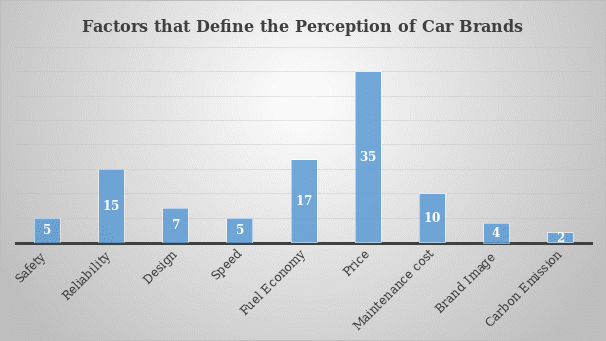
Fuel economy was another factor that emerged as important when defining the perception one has towards a car brand. In the UK, there is an increasing concern about the impact of greenhouse gases on the environment. As such, consumers currently value hybrid and electric cars over gasoline-powered cars due to their desire to protect the environment. Consumers are also sensitive about the expenditure on gasoline, which makes them prefer cars that use little fuel (Lucendo, 2019).
The report also shows that reliability is another critical factor in shaping customer perception and preferences. Consumers value cars that do not easily break down when in use. They need assurance that their car will not break down without proper cause and warning. Safety emerged as another major concern that consumers consider when making their buying decisions. Consumers prefer cars that are stable on the road, even when they are driven at high speeds.
Sometimes a driver cannot avoid an accident, especially when it is caused by the recklessness of another driver or natural phenomena. Consumers prefer a car that has effective safety mechanisms for occupants. They include properly functioning airbags that provide full security in the event of an accident, seatbelts, and an interior design intended to minimize the impact as much as possible.
The respondents also noted that they consider maintenance costs when developing a perception of a car brand. They prefer a car that is less costly to maintain, even if it is a high-performance car. They want a vehicle that does not require foreign mechanics to help with regular servicing.
The design remains a crucial factor that buyers consider when forming their perception of a given brand. The shape of the car and its aesthetics are important considerations when purchasing a car. Although the tastes and preferences of consumers vary when it comes to design, there are conventional factors that the majority of consumers consider to be important. Size, shape, and color remain among the most critical factors that consumers consider. Black, silver, and white remain some of the most preferred colors among car buyers (Scott, 2017).
In developed countries, consumers tend to prefer heavy cars with low ground clearance, as it enhances their stability and performance. Speed is another factor that consumers noted they will consider when purchasing a car. Some of the most expensive cars in the market also have the highest speeds. Fill and Turnbull (2019) argue that consumers value high-powered cars like Ferrari and Bugatti because of their speed and stability.
The outcome of the analysis above shows that consumers consider various factors when defining their perception of a specific car brand in the market. It is not about one specific feature in a car that makes it superior to others on the road. The car must be affordable to the target consumers and have low maintenance costs. It should be environmentally friendly by consuming as little fuel as possible. It should be a reliable car that does not break down easily without proper justification.
Consumers value a vehicle that offers the maximum safety possible in the event of an accident or road incident. The design of the product, in terms of size, shape, color, and space for occupants, is also taken into consideration. The analysis shows that speed is another factor that manufacturers should not ignore, as it also influences their perception of a car’s brand.
The researcher was interested in conducting a comparative analysis to determine similarities and differences in the perception of car brands in the UK and the global market. Upon reviewing the literature, it became apparent that the perception of car brands in developed countries tends to be similar. However, there was a variation when comparing a developed economy with a developing one. Masterson, Phillips, and Pickton (2021) explained that such variations are caused by the difference in road infrastructure, the purchasing power of consumers, and the purpose for which a car is purchased.
For instance, a Bugatti is a superior car to most, and it is admired by an overwhelming majority of car buyers around the world. However, the poor road infrastructure in some developing countries in Africa and Asia makes it impossible to use them there. As such, its superiority becomes of little value if one cannot use it. The researcher decided to conduct a comparison of the local market with that of a developed country and that of a developing nation to determine the relationship.
In the first comparative analysis, the researcher focused on two developed economies. Respondents were asked to state whether they believe the perception of car brands in the UK is similar to that of the US. The purchasing power of consumers in these countries is relatively the same, and so is the nature of the road infrastructure. Figure 4.2 shows the outcome of the quantitative analysis conducted.
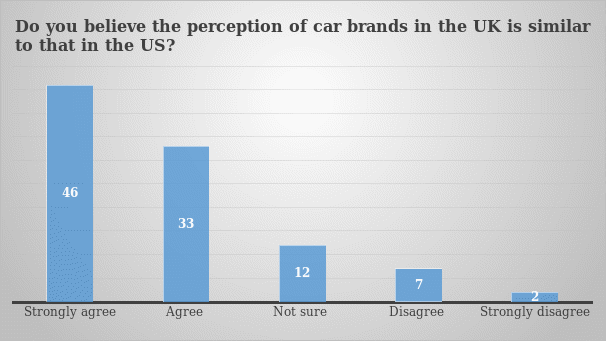
The analysis reveals that 46% of respondents strongly agree with the statement that the perception of car brands in the UK is similar to that in the US. Another 33% of the respondents agree with the same statement. It means that an overwhelming majority of respondents, 79%, believe the two countries are similar in their perception of car brands. 12% of the participants reported being unsure about the relationship. Less than 10% of the respondents held a contrary opinion to that of the majority, with 7% disagreeing with the statement, and another 2% strongly disagreeing.
The outcome of the analysis reveals that the two markets share a similar perception of car brands. It means that factors influencing car buyers in the UK are the same as those that will influence consumers in the US. Scott (2017) attributes the similarity to factors such as consumer purchasing power, infrastructure, and consumer preferences, among others. It means that a car manufacturer in the UK can position its products in these two countries in a similar way.
The review of the literature suggests that perceptions may vary when comparing a developed country with a developing nation. As such, the researcher decided to compare the UK with India to determine if the perception of car brands is the same or otherwise. Figure 4.3 shows the outcome of the analysis of data obtained from the participants.
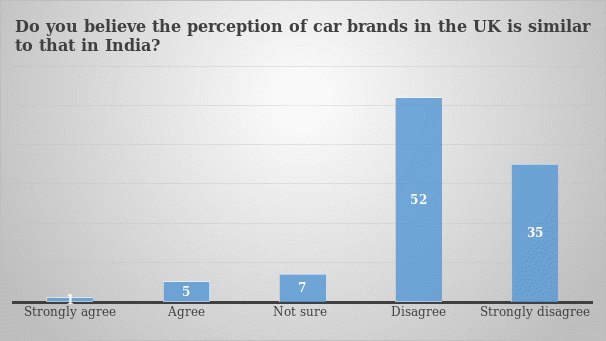
The data shows that only 1% of the participants strongly believe that the perception is the same, while another 5% agree with the statement. It means that only 6% of those who took part in the study believe that there is a similarity. Another 7% of the participants reported being unsure about the relationship. 52% of the participants disagreed with the statement that the perception is the same, while another 35% strongly disagreed with it. It means that a vast majority of those who took part in the study, 87%, believe that the perception of car brands in the UK differs from that in India.
Although India’s economy is considered larger than that of the UK, primarily attributed to its population, which is more than 20 times larger than the UK’s, it is still regarded as a developing economy when GDP per capita is taken into consideration. The majority of Indians who own cars prioritize the functionality of the vehicle over its aesthetic value. They require a vehicle that can facilitate their movement and transportation of goods from one location to another. Factors such as comfort are not valued by the majority in the UK. It is important to note that the analysis focused on the market in general.
However, in some cases, a specific place of residence has great importance in the choice, and the factors vary significantly (Denstadli & Julsrud, 2019). The UK has car buyers who are financially constrained, and their goal may be similar to that of the majority of car owners in India. On the same note, some consumers in India are rich enough to purchase some of the best car brands in the market.
Buying Decisions
Car manufacturers are keen on influencing customers’ perceptions of their cars. According to Scott (2017), promotional campaigns are often designed to shape the target audience’s perception in a specific way. The researcher asked respondents if they believe consumers’ perception of a car’s brand influences their buying decisions. The data obtained from the participants were analyzed statistically using Excel, and the outcome of the analysis is presented in the chart shown in Figure 4.4.
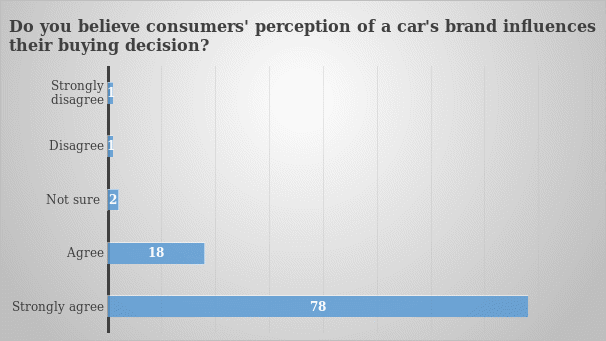
The data show that 78% of the participants strongly believe that consumers’ perception of a car brand impacts their buying decisions. Another 18% agreed with the statement, which means that there was near-unanimous agreement, at 96%, among the respondents that consumers’ perceptions directly influence their buying decisions. Of those interviewed, 2% reported being unsure about the relationship between the two variables. There were only 2% of those who had a contrary opinion to that of the majority, with 1% disagreeing and another 1% strongly disagreeing with the statement.
The analysis reveals a correlation between consumers’ perceptions and their buying decisions when they intend to purchase a car. It shows that when consumers have a positive perception of a brand, they are likely to purchase its cars. They believe that the brand will offer them the value they desire.
Dawson (2020) notes that due to the cost associated with cars, it is likely that one may consult before making a purchase, even in cases where they have a personal opinion. It is common in cases where one is unable to decide between two brands that they consider superior. In such a case, the opinion of a friend or relative may be the factor that decides which car they purchase. As such, car companies must ensure that they influence the perception of the general population as much as possible.
Customer Perceptions and Brand Promotion
The analysis of primary data has reaffirmed the importance of car brand perception in the buyer decision-making process. Car manufacturers are now aware that the decisions that their customers make are significantly influenced by their (buyers’) perceptions (Denstadli & Julsrud, 2019). The research needed to provide information about ways in which a company in this industry can influence customers’ perceptions of their brands. Respondents were asked to state one way in which they believe these companies can improve customers’ perception of their brand. Figure 4.5 illustrates the outcome of the primary data analysis.
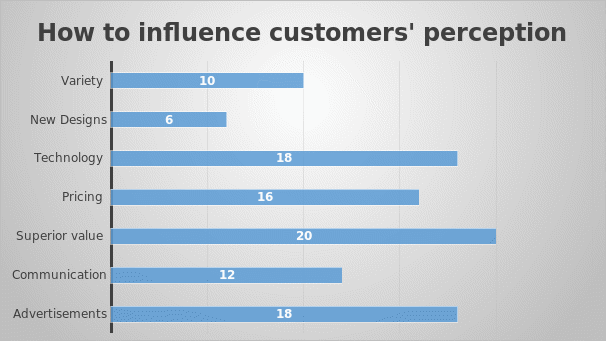
A significant number of respondents noted that offering superior value to customers is the best way to enhance their perception. In many cases, consumers’ perception is often influenced by the experience that they have when using a given product. When they are thrilled with the value offered, their perception of the product will improve, even if they had previously doubted its value. As such, car manufacturers keen on influencing customer perception should start by offering them superior value.
The use of emerging technologies to improve the product was identified as a major factor that can help improve customers’ perception. In the UK, the US, and many other developed nations, customers are increasingly opting for electric and hybrid cars (Bridge, 2020). They feel the need to be environmentally responsible when buying and using cars. As such, when presented with two equally good car brands, they are likely to choose an electric car or a hybrid over one that uses gasoline exclusively. These companies should also utilize emerging technologies to enhance the efficiency of their vehicles.
The advertisement was identified as another major factor that can help influence customers’ perceptions. Having a superior car in the market is not enough when a firm is operating in a highly competitive market. The advertisement enables customers to be informed about the existence of a given brand and its products, its proposition in the market, and the reasons why it is superior to other brands. Advertising has always been used as a means of promoting a firm’s brand.
However, Lucendo (2019) warns that when using this powerful tool to promote a brand, care should be taken to avoid making promises that a firm cannot deliver. When customers are offered a value that is below what the firm promised, then there is a risk of dissatisfaction, which will negatively influence the brand image. Respondents also identified communication as a crucial factor, particularly when addressing major controversies and issues with customers and members of the public. A firm needs an interactive form of communication that allows it to get information from customers and respond accordingly.
Pricing remains a major factor in defining the perception of customers in the market, as shown in the figure below. According to Lucendo (2019), when a product is priced higher, there is an overall perception that it offers greater value. On the other hand, when a product’s price is low, consumers may perceive it as inferior. It is the responsibility of the firm to ensure that its products are priced based on the value that they offer. Factors such as car variety and design should also be taken into consideration when a firm seeks to influence customer perception in the market.
Discussion
The United Kingdom’s car industry, just like that of the global market, has experienced massive growth over the years. As the market size continues to grow, segmentation and targeting have become crucial for manufacturers seeking to expand their market share. The perception of customers towards specific products generally depends on the segment to which they belong, as explained in Maslow’s hierarchy of needs (Fill and Turnbull, 2019).
However, the perception can also be influenced by other factors that are unique to each country. The primary data analyzed above, along with information obtained from primary sources reviewed in Chapter 2 of this report, indicate that the perception of car brands in the UK is influenced by various factors. These factors include the price of the product, its reliability, the car’s design, fuel consumption, environmental friendliness, performance, and speed.
The study revealed that the perception of car brands in the UK market is similar to that in equally developed nations, such as the US, Canada, France, and Germany, among others. These advanced economies share several factors that directly influence customer perception. There is a road network that can sustain the use of supercars, a feature not commonly found in developing economies (Lucendo, 2019).
The data analyzed also show that the purchasing power of people in these developed economies is relatively the same and significantly higher than that of emerging economies. The tastes and preferences of people in the UK are also similar to those in these developed nations. As such, likely, the perception customers have towards car brands is generally the same.
When comparing the perception of car brands in the UK market with that of the developing nations, the study found a significant difference. Lucendo (2019) explains that the purchasing power of customers in third-world countries is significantly lower than that of the UK. As such, a customer in a country like Bangladesh or Rwanda will focus on a basic car that can facilitate their movement from one place to another without considering factors such as comfort.
Road infrastructure in these third-world countries is also so deplorable that it is impossible to use car brands such as Lamborghini, Ferrari, or Bugatti. Although these consumers are aware that these are supercars, they remain indifferent towards them because not only can they not afford them, but they also lack proper roads on which to use them. The tastes and preferences of these consumers differ from those of developed economies. These consumers are willing to compromise on quality as long as they are assured of a lower price, something that is uncommon in the UK.
Consumer Perception of a Car Brand and Their Buying Decision
Car manufacturers should understand how consumers’ perception of their brand affects their buying decisions. According to Fill and Turnbull (2019), when there is stiff market competition, customers’ decisions are often influenced by minor issues. Sometimes, when a consumer has only two brands to choose from and cannot settle on the one that offers the best value, they will rely on a friend or family member whom they believe has experience or knowledge about the two competing products. It means that their final decision will depend on the perception of the friend or family.
The perception an individual has is often influenced by various factors, one of which is the information available in the public domain. When there is a constant debate on online platforms and other social media settings about a given brand offering substandard services, people are more likely to believe it, even if they have not used the service (Scott, 2017). They trust that those who have used the product and are disappointed in the process. In such cases, they will avoid purchasing the product or advise others against it primarily because of information obtained in public discourse. They may not even bother to try the product and confirm those claims.
The customer’s perception can also be influenced by the actual use of the product. When purchasing a car, there is always the expectation that one has. When the expectation is met, they will be satisfied with the product and its brand. When it is exceeded, they will be thrilled, and they can become evangelists for the product (Lucendo, 2019). When expectations are not met, they will be dissatisfied and can spread a negative message about the brand.
Segmentation and target marketing become critical at this stage because they help ensure that a firm only focuses on a specific segment of the market whose needs it can meet in the best way possible. It helps in eliminating cases of dissatisfaction caused by targeting a market whose needs cannot be met by a firm’s current products. Once an individual’s perception has been formed, it may not be easy to change it. When one is thrilled with a given brand of car, they are likely to remain loyal to it and purchase the same brand in the future. They will also spread positive information about the brand based on their experience.
On the other hand, when they are disappointed by the product, the negative experience can last a long time. Efforts by a firm to change the perception through strategies such as promotional campaigns may not yield the expected results, as Morganti and Browne (2018) observe. It is, therefore, essential for a firm to ensure that it defines the perception customers have of its product. Any issue that may result in a negative perception towards their brand or any of their products should be addressed swiftly and effectively.
Influencing Customer Perception
The outcome of analyzing primary data and information gathered from participants strongly suggests that customers’ perception of a brand significantly influences their buying decisions. It also defines how such individuals influence others’ perceptions in case their opinion is sought. As such, it is essential for car manufacturers in the UK and around the world to find ways to influence customers’ perceptions in a way that favors them. A firm can use several strategies to ensure that it influences customers’ perceptions. This section will discuss some effective strategies for influencing how people perceive a given product.
One of the most effective ways to influence customers’ perceptions is through the continuous delivery of high-quality products. A significant number of those who develop a perception of a given brand often base it on their experience. As discussed above, their experience will be positive or negative depending on how well their expectations were met (Scott, 2017). A firm that maintains a high quality in its car production will earn a positive reputation in the market. Factors such as engine capacity and reliability, a car’s design tailored to customers’ needs, and comfort will all influence how customers perceive it.
Customers’ needs and expectations in the market continue to evolve in response to emerging trends and practices. It means that a firm must find a way of continuously adjusting its products to meet these new needs. Emerging technologies can help a firm to maintain continuous improvement of its products. Successful companies, such as Mercedes-Benz, have adopted innovation as a means of staying ahead in the technology landscape.
Once it has introduced a new revolutionary product to the market, it will focus on developing another product (Morganti & Browne, 2018). At the firm, there is constant pressure to deliver to the market something that will thrill customers. Although some of its products are expensive, the company has successfully created a unique niche for its customers by meeting their specific needs.
Promotion remains an effective tool for enhancing the image of a brand or product in the market, especially when the level of competition is intense. It serves as a reminder that a firm has a product that meets customer expectations. Sometimes, it also reminds customers of new products that a company offers, which are not yet available in the market.
Mercedes-Benz is a prominent firm recognized for its executive vehicles and marketing methods (Li & Wang, 2021). Figure 4.6 shows the typical Mercedes-Benz advertisement poster. The advertisement is intended to remind consumers of the company’s product and its superiority to the existing brand. As mentioned above, the promotional message should be directed to a specific segment of the market.

Managing public image is another factor that must be considered when trying to manage customer perception in the market. In the automotive industry, issues such as faulty brake systems, engine leaks, computer problems, or potential fire hazards have been reported in the past. In such cases, it forces the company to recall all the products with such faults and to compensate customers or dealers as may be appropriate (Ackermann, 2021).
Besides taking such corrective measures, the management should communicate to the public, explaining the cause of the problem and how it will be addressed. The company should also reassure customers that existing products do not have similar problems. Effective and timely communication helps avoid rumors and miscommunication that may harm the brand’s image in the market.
Conclusion
The automotive industry has experienced significant growth over the years. The report shows that although the COVID-19 pandemic had a crippling effect on the sector, it has successfully made a recovery and is likely to experience further growth. In the UK, there is massive competition among local and foreign car manufacturers.
As such, there is a need for each company to ensure that it defines the perception of its customers towards its brand. Findings from both primary and secondary sources indicate a direct relationship between customers’ perceptions and their buying decisions. When they have a favorable perception of a given brand, they are more likely to purchase it.
The researcher was interested in comparing the perceptions that UK customers have towards car brands with those of international customers. The analysis of data and review of the literature revealed that customer perception depends on the country’s economic state. In developed economies such as the UK and the US, the perception of customers toward car brands is the same. These customers have the same purchasing power, tastes, and preferences, as well as the road infrastructure that will support the use of these cars.
However, this is not the case when comparing a developed economy with a developing one. In developing countries like India, the majority of customers are price-sensitive. As such, they are often willing to overlook factors such as comfort and the unique design of the car they purchase, as long as they get the product at an affordable price.
The leading manufacturers of cars in the UK should understand the significance of customers’ perception of their brand when they (customers) are making their buying decisions. They need to find ways to create a favorable perception of their product to ensure that it is prioritized when customers make a decision. The respondents identified various ways in which a firm can protect its image in the market, despite the stiff competition that exists. The paper also outlines the importance of segmenting the car market based on the targeted consumers and the country being targeted.
Recommendations
Practice
The perception of car brands in the United Kingdom and other global markets is shaped by several key factors. It is the responsibility of individual car manufacturers to understand and act in a way that ensures they receive a favorable perception among customers. In a highly competitive market like the car industry, companies should focus on strengthening their market position. The following recommendations can help strengthen the perception of a car brand in the local and international markets:
- It is essential to adopt emerging technologies and continually improve the product in response to shifting customer tastes and preferences. Emerging technologies will enable a firm to adjust its products in response to the evolving needs and expectations of customers.
- The need to protect the environment is becoming increasingly important in the local and global markets. As electric and hybrid cars gain popularity, local manufacturers must redefine their products to ensure they align with emerging environmental needs.
Further Studies
The car market is growing rapidly, and it has attracted the attention of scholars who have been interested in addressing specific issues. In this study, the researcher sought to investigate and compare the perceptions of car brands in the UK and international markets. The focus of the study was narrow enough to facilitate a detailed investigation that can help local players enhance their competitiveness both in the local and international markets. However, there is a need to conduct further investigation to address issues that were beyond the scope of this study. The following recommendations should be considered by scholars in this field:
- It is essential to examine the differences in perception of car brands between the United Kingdom’s market and those of other developed economies in North America. The investigation should focus on determining whether there are specific cultural differences in Europe and North America that influence consumers’ perceptions.
- Further studies are needed to determine the government’s role in shaping customer perceptions within a given country. The impact of government policies may help explain differences in customers’ perceptions between the UK and other developed nations in Europe.
- Scholars should conduct further studies to determine if the COVID-19 pandemic has had a lasting impact on the perception of car brands in the UK and the international markets. The focus should be on determining how the new trend of working from home has changed consumers’ perceptions of specific car brands.
Reference List
Ackermann, M. (2021) Mobility-as-a-Service: the convergence of automotive and mobility industries. Cham: Springer.
Aityan, S. K. (2022) Business research methodology: research process and methods. New York, NY: Springer International.
Anjos, M. F., Gendron, B., & Joyce-Moniz, M. (2020) Increasing electric vehicle adoption through the optimal deployment of fast-charging stations for local and long-distance travel. European Journal of Operational Research, 285(1), 263–278. Web.
Armstrong, G. M. (2018) Marketing: an introduction. London: Pearson.
Bridge, O. (2020) ‘Will the automotive industry bounce back post-lockdown?’ Grant Thornton, Web.
Carducci, J. et al. (2020) The Wiley Encyclopedia of Personality and Individual Differences, set. Hoboken: John Wiley & Sons.
Chaffey, D. and Ellis-Chadwick, F. (2019) Digital marketing. London: Pearson.
Dawson, C. (2020) A-Z of digital research methods. New York, NY: Routledge.
Denstadli, J. M., & Julsrud, T. E. (2019) Moving Towards Electrification of Workers’ Transportation: Identifying Key Motives for the Adoption of Electric Vans. Sustainability, 11(14), 3878. Web.
Deplano, R. and Tsagourias, N. (Eds.) (2021) Research methods in international law: a handbook. Cheltenham: Edward Elgar Publishing Limited.
Doner, F., Noble, G., & Ravenhill, J. (2021) The Political Economy of Automotive Industrialization in East Asia. Cham: Springer.
Duff, M. (2022) ‘2024 Bugatti Mistral Roadster Revealed as Brand’s W-16 Sendoff’, Car and Drive. Web.
Fill, C. and Turnbull, S. (2019) Marketing communications: touchpoints, sharing, and disruption. London: Pearson.
Gawrysiak, J. et al. (2020) ‘Using e-sports efficiently to enhance and extend brand perceptions: a literature review’, Physical Culture and Sport. Studies and Research, 86(1), pp. 1-14.
Hackley, C. and Hackley, A. (2021) Advertising & promotion. New York, NY: SAGE.
Hennink, M., Hutter, I. and Bailey, A. (2020) Qualitative research methods. New York, NY: SAGE.
Herrmann, S. (2018) ‘Toyota car fault prompts massive recall’, BBC, p. 2.
Jobber, D. and Ellis-Chadwick, F. (2020) Principles and practice of marketing. New York, NY: McGraw-Hill Education.
Korstanje, M. (Ed.) (2021) Socioeconomic Effects and Recovery Efforts for the Rental Industry: Post-COVID-19 Strategies. Hershey, PA: IGI Global.
Laurs, D. and Renneboog, L. (2019) ‘My kingdom for a horse (or a classic car)’, Journal of International Financial Markets, Institutions & Money, 58. Web.
Liu, N., Nikitas, A. and Parkinson, S. (2020) ‘Exploring expert perceptions about the cyber security and privacy of connected and autonomous vehicles: a thematic analysis approach’, Transportation Research, 75(1), pp. 66-86.
Lucendo, J. (2019) Cars of legend: first cars of history. Boston, MA: Cengage.
Maslow, A. (2019) A theory of human motivation: Psychological research that helped change the field for good. New Delhi: General Press.
Mattioli, G. et al. (2020) ‘The political economy of car dependence: A systems of provision approach’, Energy Research & Social Science, 66. Web.
Moore, S. (2022) ‘The Current State of the Global Automotive Manufacturing Market’. Web.
Morganti, E. and Browne, M. (2018) ‘Technical and operational obstacles to the adoption of electric vans in France and the UK: an operator perspective’, Transport Policy, 63(1), pp. 90-97.
Morvan, C. and O’Connor, A. (2019) An analysis of Leon Festinger’s theory of cognitive dissonance. Boca Raton, FL: CRC Press.
Naik, C. (2021) On the existence of the self: and the dismantling of the physical causal closure argument. Chennai: Notion Press.
Nunan, D., Birks, D. F. and Malhotra, N. (2020) Marketing research: applied insight. London: Pearson Education Limited.
Paul, J (2018) ‘Toward a ‘masstige’ theory and strategy for marketing’, European Journal of International Management, 12(5), pp. 722-745.
Penmetsa, P. et al. (2019) ‘Perceptions and expectations of autonomous vehicles: a snapshot of vulnerable road user opinion’, Technological Forecasting and Social Change, 143(1), pp. 9-13.
Santos, G. and Davies, H. (2020) ‘Incentives for quick penetration of electric vehicles in five European countries: perceptions from experts and stakeholders’, Transportation Research, 137(1), pp. 326-342.
Saunders, M., Lewis, P. and Thornhill, A. (2011) Research methods for business students. London: Pearson.
Soroka, O. and Luman, R. (2023) ‘Car Market Outlook 2023: Seeing is believing’, ING. Web.
Scott, P. (2017) The market makers: creating mass markets for consumer durables in inter-war Britain. Oxford: Oxford University Press.
Tan, W. (2018) Research methods: a practical guide for students and researchers. Singapore: World Scientific.
Wang, C. (Ed.) (2019) Scholarly publishing and research methods across disciplines. Hershey, PA: IGI Global.
World Auto Forum. (2021) World’s top 10 most valuable automobile brands of 2021! Web.
Xu, X. and Fan, C. (2019) ‘Autonomous vehicles, risk perceptions, and insurance demand: an individual survey in China’, Transportation Research Part, 124(1), pp. 549-556.