Executive Summary
The purpose of the project is to reduce the incidence of obesity among firefighters and enhance their physical agility. Agile firefighters will be efficient in their job, thereby saving more lives. This is the rationale for reducing the weight of obese firefighters.
The first step involves collaborating with healthcare providers from local hospitals to determine the prevalence of obesity among firefighters in two local installations. The researchers of this project will accompany the healthcare providers to the sites to get first-hand information. Participation by firefighters is voluntary; they agree to have their body mass index (BMI) measured and grant access to their medical history, which is available at the hospitals they visit. The medical history is kept confidential through an agreement form signed by the researchers, healthcare providers, and firefighters.
Once the obese cases are recorded and expressed as a percentage of the number of participants representing the whole state, evidence-based interventions, including nutrition, exercise, and education, will be actualized. Detailed interventions will be obtained from reliable resources – journals, books, and magazines. Among them is the production and distribution of healthy foods made available to the market through government enforcement, ensuring that only healthy foods are available in the state’s markets.
To implement the interventions, the government will be requested to fund the program. A proposal is made to the ministries of agriculture and health, which collaborate with the state government, to implement a one-year pilot program. The program developed through collaboration is presented to the ministries for funding. Once funds are approved, the program is implemented for 1 year, and an evaluation is done to determine its success. Evaluation involves determining the change in obesity prevalence among firefighters within the intervention period.
Introduction
Obesity is a common topic on the internet and in society. Several factors contribute to excessive weight gain; obesity is often associated with reduced physical activity, leading to a buildup of body fat (Holmes, 2021). At the community level, several factors contribute to obesity, including the availability and affordability of healthier foods, marketing and promotional efforts, specific policy guidelines, and peer and social support (CDC, 2020). In the US, 42.5% of adults above 20 years are obese, with 9.0% suffering from severe obesity (Cheryl et al, 2021). The figures, reported in 2021, continued to increase through 2023, underscoring the need for urgent and sustained interventions. Noguchi (2021) reaffirms the prevalence of obesity among Americans using data obtained by the American Psychological Association, which indicated 36.2% to 45.7% of them were either obese or overweight.
A firefighting job requires agility, which can be achieved if a firefighter has the right weight. The 42.5% adult obese population does not exempt firefighters, and therefore, there is a need to unearth the actual number of obese firefighters within the state. Once the number is established, this project will develop and implement interventions that will decrease obesity rates among firefighters and, by extension, the general public. Obesity contributes to chronic health conditions such as diabetes, high blood pressure, and stroke (CDC, 2022).
Firefighters are exposed to chemical substances that can worsen underlying health conditions when inhaled. They, therefore, need to be physically and health-wise fit to perform the firefighting job. If firefighters are unfit and unable to deliver on their job, they put themselves and others at risk of perishing in fires. Ensuring the agility of firefighters ensures their own safety and that of others.
The research project begins by identifying the % of obese firefighters with the help of community health workers. It then develops and proposes educational, nutritional, and exercise interventions by government ministries and authorities. Interventions to reduce obesity among firefighters will include diets rich in fruits, vegetables, whole grains, and lean protein, with increased physical activity and health education for the population.
Data Collection
Healthcare providers, specifically nurses from nearby hospitals, will be involved in diagnosing obesity among firefighters while adhering to the HIPAA (Health Insurance Portability and Accountability Act of 1996). HIPAA requires that a patient’s health information be kept secret without consent. CDC (2023) describes a community health worker as one who liaises between health and social services to ensure the population accesses services that will improve their health. The health worker may be a certified educator with clinical knowledge.
Community health interventions should involve coaches and counselors utilizing technology to help clients lose weight (CDC, 2023). The health workers will visit firefighters’ offices, accompanied by the researchers, to diagnose and record data on cases of obesity. A face-to-face interview is a common method for collecting data (Kwik Surveys, 2023). This method will provide researchers with evidence of the situation on the ground. Visitations will be made as follows:
- Fire office 1: 8.00 am to 12.00 pm.
- Fire office 2: 1.00 pm to 5.00 pm.
For both installations, the determination of obese cases and related health complications will be completed within a week. It will involve measuring BMI and accessing health information from hospitals they visit. Provision of this information will be voluntary and will not be disclosed to safeguard patient privacy.
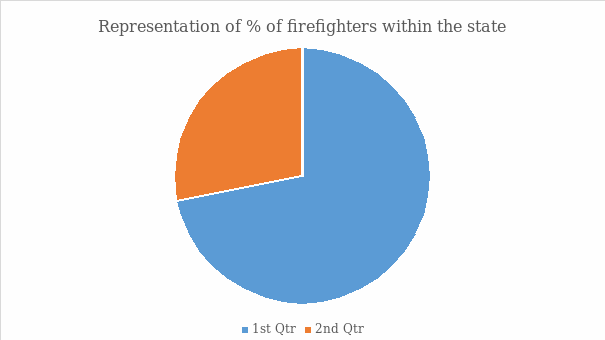
The health information will be used as a guide for further interventions. The number of obese cases will be presented as a percentage of the number of firefighters within the state. The firefighter management will help determine the number of such workers in the state. The percentage of obese firefighters compared to the number of firefighters within the state will be visualized in a bar chart.
Rationale
Obesity prevention will save costs associated with chronic diseases. Obesity is classified as a significant risk factor for chronic diseases (Kabin et al., 2020). The cost of health complications arising from obesity is expected to surpass $48 billion a year by 2030 in the US.
The high costs will deny development funds to other economic areas. To ensure such costs are reduced, the primary cause, obesity, will be addressed through carefully thought-out interventions that involve all stakeholders. These include the federal and state governments, healthcare providers, obese individuals, health and agriculture ministries, and society at large.
Factors that contribute to obesity are diverse and require multi-dimensional approaches to resolve. Some firefighters admit to lacking knowledge about managing their weight and having no access to exercise (Muegge et al., 2020). Firefighters, therefore, need education on weight management and should have access to exercise. Eating patterns, conditions in which we live, learn, and work, sleep patterns, level of physical activity, genetics, and certain medications also contribute to obesity (CDC, 2022). Obesity reduction aims to reduce or eliminate these factors within a population.
Obesity Reduction Using Evidence-Based Approaches
- Stress can lead to weight gain due to reduced activity and changes in eating patterns, as observed among Americans during the pandemic (Noguchi, 2021).
- Excessive weight reduces a person’s agility.
- The Body Mass Index (BMI) is the most effective way to determine whether a person has a normal weight, is overweight, or is obese (National Institutes of Health, 2021). A BMI value above 25 indicates overweight, 30-39.9 points indicate obesity, while a value above 40 indicates severe obesity.
- Healthy foods within an environment (Lean protein, eggs, vegetables, avocado, apples, berries, nuts and seeds, salmon, shrimp, unripe bananas, raw oats, legumes, chia seeds) can help reduce body weight (Harvard T.H. Chan, 2023).
- The level of income and education determines the type of food people eat and, consequently, their health (Harvard T.H. Chan, 2023).
- Increased physical activity can help reduce body weight (Harvard T.H. CHAN, 2023).
Detailed Interventions and Recommendations for Reducing Obesity
Interventions will primarily aim at improving eating habits and food choices. Kabin et al. (2020) highlight approaches to reducing obesity, including policy interventions, system changes, and ensuring a healthy environment, all of which are geared towards ensuring healthy food is available in the locality. If healthy foods are readily available, American citizens will also eat healthily wherever they work, live, or play.
Borrowing from these interventions, cooperative agreements will be initiated between the agriculture and health ministries, along with state and federal governments, to ensure that healthy foods are produced and distributed within the locality through sustainable funding. The health ministry will advise on healthy choices, allowing the agriculture ministry to implement the production. Policy changes may be necessary; therefore, ministries need to work closely with the legislature.
The state and local authorities will ensure groceries meet the health regulations requiring them to sell organic grains, fruits, and vegetables. This will additionally require interventions from the Standards Bureau to determine food quality. Grocery stores that flout health regulations should be closed, and their owners should be prosecuted. Another source of interventions to fund health programs will be the CDC’s ‘Nutrition, Physical Activity, and Obesity’ division.
The Nutrition, Physical Activity, and Obesity Division. It was launched in 2014 to reduce cases of obesity in high-obesity areas with a prevalence above 40% (Kabin et al., 2020). The functional division will be asked to enhance its activities in the locality, working collaboratively with the governments, ministries, and other stakeholders to fund the health program. Data will inform the call for intervention on the prevalence of obesity among firefighters and, by extension, the local population. Through its various departments, the CDC has been involved in promoting health programs by funding advanced agricultural research, environmental activities, and initiatives that support human health. Community-based interventions to reduce obesity in rural Alabama were implemented, focusing on specific groups (Kabin et al., 2020). Other interventions recommended by Kabin et al (2020) include:
- Education touching on environmental conservation and improvement.
- Evidence-based health interventions aimed at increasing the consumption of healthy foods and drinks.
- Evidence-based physical activity programs.
Evidence-based physical activity, nutrition, and education programs will be implemented from the above interventions.
Physical Activity
This is one way that can help control and reduce excessive body weight. The American external icon recommends that adults engage in at least 150 minutes of moderate to vigorous physical activity per week (CDC, 2022). Firefighters are adults, and this guideline will be applied to them. They will attend moderate and vigorous exercises twice a week, on Mondays and Fridays. The exercises begin with moderate intensity and then gradually increase to minimize body shock.
Body activity is reduced by automobiles, necessitating the use of non-motorized means of transportation, such as bicycles or walking, to commute to work. Implementing this strategy requires the support of policy guidelines. Legislation requiring non-motorized means of transport within towns in the state will be sought to help firefighters (and the general public) lose weight. This intervention will benefit not only firefighters but also the broader population. Other physical activities will include ball games, athletics, and aerobics. Aerobic exercises require the intervention of experts, which has financial implications; therefore, the states will be involved.
Table 1: Physical Activities for Weight Loss
Nutritional Interventions
Specific nutritional interventions will include adherence to the 2020-2025 Dietary Guidelines for Americans external icon. The guideline emphasizes vegetables, fruits, a low-fat or fat-free diet, whole grains, lean proteins, and limiting sugary beverages and sodium-rich foods (CDC, 2022). Meals served to firefighting staff will adhere to the guidelines. Relevant authorities will implement policies developed by the state through the legislature. Impromptu visits to firefighters’ meal points will be made to check compliance, and those flouting the regulations will be prosecuted.
Policy interventions that require the growth and supply of organic foods to groceries and eateries will also ensure firefighters have no access to unhealthy foods. The policy should be implemented within the state, so its success will inform other states of workable strategies. This will go a long way to ensure the American population is healthy with standard weights.
Education
It will involve theoretical learning of all weight reduction strategies, including sleep, avoiding/reducing certain medications, nutrition, eating habits, and exercises.
Table 2: Physical Activity Program
Education resources will include textbooks, journals, health magazines, and other websites.
1-Year Pilot Program for Implementation by the Government(s)
Presentation of Research Findings
- Activity: Presentation of research findings on the prevalence of obesity among firefighters within the state.
- Timeline: Within 2 days of making the findings.
- Action needed: Acknowledge receipt of the proposal for funding.
- Expected outcome: Presentation of the report to relevant government agencies/ministries for study.
Feedback from Government
- Timeline: 1-2 weeks after the presentation of the proposal.
- Action needed: Study the feedback and make suggestions/adopt government recommendations for the implementation of a pilot program.
- Expected outcome: The government, through the ministries, agrees to fund the program.
Creation of a Structured Implementation Body
- Timeline: 1-2 weeks after the government accepts to fund the program.
- Action needed: Conduct nominations/elections to constitute the implementation body.
- Expected outcome: Fully established implementation body.
Planning Implementation
- Activity: Development of an extensive implementation plan by the implementation body.
- Timeline: 1-2 weeks after the constitution of the body.
- Action needed: Wide consultations with stakeholders: firefighters, health professionals, standards bureau, health, and agriculture ministry.
- Expected outcome: A fully developed implementation plan agreed upon by stakeholders.
Project Implementation
- Timeline: 1-year pilot program.
- Action needed: Ministry of Agriculture and Health work collaboratively to ensure:
- Firefighters access healthy diets aimed at reducing body weight.
- Production of organic foods, with whole grains, fruits, and vegetables being key.
- Exercise program developed and implemented in conjunction with the sports ministry.
- Expected outcome: Reduction in obese cases among firefighters by 50-70%.
Evaluation of the Success of the Program
- Timeline: 2-3 weeks after completion of the 1 year piloting.
- Action needed: Evidence-based evaluation. Actual data on weight loss will be analyzed and discussed, with merits and demerits of the program highlighted.
- Expected outcome
- Reduction in the number of obese cases among firefighters.
- Availability of more fruits and vegetables in the market, eateries, and office menus within the state.
Expected Outcomes After Program Implementation
Project outcome may or may not be desirable, necessitating further actions. CDC (2022) classifies outcomes as short or long-term, and further as physical, economic, social, and communication. Short-term changes involve environmental changes that provide healthier foods and boost physical activity. For example, increasing the quantity of vegetables and fruits served to firefighters is a short-term outcome that can be farm-to-consumer (CDC, 2022). This outcome’s assessment should focus on successes and failures so that failures are corrected and successes enhanced.
The physical outcome is promoted through access/proximity to healthier foods that promote physique and space for exercise to burn calories and promote balanced body weight. Price/tax changes (reduction) are economic outcomes that will enable the population to afford to buy healthier foods. Advertisements, on the other hand, will create awareness among people (CDC, 2022). Borrowing from these measures, the following will be implemented:
- Working collaboratively with the agriculture and health ministries to ensure healthier foods are sold to consumers within the state. Reinforcement will be done by the standards bureau in collaboration with the agriculture and health ministries.
- The sports ministry will organize physical activity sessions in selected spaces.
- The agriculture and health ministries will collaborate with the standards bureau to control the healthiness of foods that are sold. The three entities working collaboratively will provide the definition of healthier foods (in relation to obesity). It should mean diets rich in fruits and vegetables, lean protein, and low-fat foods.
The economic outcome should be reduced food prices but enhanced health benefits. This will require policy changes and collaboration between the state government and the legislators. The government will need to subsidize production to facilitate this. It will also enforce the regulation to ensure businesses adhere to the price recommendations.
The availability of healthy foods within the state benefits firefighters and the general population. CDC (2020) anticipates long-term outcomes where obesity prevention is cost-effective and benefits all subgroups within a group. This is why the project will seek to extend the benefits to the rest of the population rather than firefighters only.
Evaluation/Monitoring of Progress
The progressive weight loss will be monitored through a monthly review of the weight loss and BMI of the affected individuals. Visitations will be made to the firefighters’ office, and the measurements will be conducted at the venue. On request, individual firefighters who may be uncomfortable having their measurements taken at the workplace will be visited in their homes for intervention.
Results will be presented in the form of bar graphs and bar charts. Visualization of the results using bar charts or bar graphs will give an accurate picture at a glance. This way, the results will call for enhanced interventions if needed or indicate the extent of success of the program. For instance, the Healthy People 2020 Foundation Health Measures was used to measure health improvements within a population using bar graphs and line graphs to improve population health by 2020 (CDC, 2020).
The outcome will inform further interventions, with those found to have maintained or gained weight after interventions being subjected to other/enhanced weight reduction remedies or increased intensity of exercise and education. Evaluation is long-term until the condition is significantly reduced among firefighters.
Conclusion
Obesity is when body fat builds up, leading to excessive weight. Factors that contribute to obesity are those that encourage the build-up of body fat. They include reduced physical activity, fat-rich foods, stress affecting eating patterns and exercise, and certain medications, such as steroids.
Body weight reduction must therefore involve reducing body fat and will include regular exercise and increased consumption of whole grains, fruits, vegetables, and lean protein. Some of the population may not be aware of the factors that contribute to obesity. Therefore, sustained education can help reduce cases of obesity.
Obesity may also be genetically inherited, making treatment challenging. The need to reduce obesity cases among firefighters is to ensure they move swiftly and, therefore, become efficient at work. This way, they can save lives in case of fire incidents. Government intervention is needed to deal with obesity in society, particularly in the US, where the prevalence is high. The government can fund research projects such as this to reduce obesity in the population.
References
CDC (2022). Causes of Obesity. cdc. Web.
CDC (2023). Community Health Worker Resources.cdc. Web.
Cheryl et al (2021). Prevalence of Overweight, Obesity, and Severe Obesity among Adults Aged 20 and Over: United States, 1960–1962 Through 2017–2018.cdc. Web.
Harvard T.H. CHAN (2023). Obesity Prevention Source. hsph.harvard.edu. Web.
Holmes, J. (2021). Tackling Obesity-The Role of the NHS in a Whole-System Approach. kingsfund.org.uk. Web.
Kwik Surveys (2023). Quantitative Data Collection and Analysis. freeonlinesurveys.com. Web.
Muegge, C. M., Zollinger, T. W., Song, Y., Wessel, J., Monahan, P. O., & Moffatt, S. M. (2020). Barriers to weight management among overweight and obese firefighters. Journal of Occupational and Environmental Medicine, 62(1), 37-45.
National Center for Health Statistics. Healthy People 2020 Foundation Health Measures. Healthy People 2020 Final Review. 2021. Web.
National Institutes of Health (2021). How are obesity & overweight diagnosed?nichd.nih.gov. Web.
Noguchi, Y. (2021). Obesity Rates Rise During Pandemic, Fueled By Stress, Job Loss, Sedentary Lifestyle. Npr.org. Web.