Introduction
As one of the most contentious and polarizing issues in American politics, the debate over gun control has been ongoing for decades. While some argue that the Second Amendment guarantees an individual’s right to own and carry firearms, others contend that the proliferation of guns has led to a surge in gun violence, with devastating consequences (Sanjurjo 32). In recent years, mass shootings in places such as schools, churches, and movie theaters have brought the issue of gun control to the forefront of national debate once again (Campbell 126).
As such, it is imperative to consider the evidence and arguments for increased restrictions on firearm rights and legislation in America. There is a need to examine the impact of gun violence on public safety, the relationship between guns and crime, and the effectiveness of existing gun laws (Sanjurjo 39). Ultimately, the lives and safety of citizens must take precedence over individual rights. There is a need to adopt restrictive gun rights and laws, as it will help reduce gun violence, despite various objections and opposition.
Arguments Supporting Stricter Gun Control Laws
One of the main reasons for supporting restrictive gun policies is the effort to minimize gun-related deaths. According to the Centers for Disease Control and Prevention (CDC), in 2019, there were 39,707 gun-related deaths in the United States, including suicides, homicides, and accidental shootings (CDC). The argument is that if gun laws are stricter, it will be more challenging for people with malicious intentions to obtain guns, thereby reducing gun-related deaths.
In the US, mass shootings have unfortunately become all too common. In recent years, there have been several high-profile mass shootings, such as the 2017 Las Vegas shooting, the 2018 Parkland shooting, and the 2019 El Paso shooting, among others (CDC). The argument for limited firearm access and regulations is that it will prevent individuals with a history of mental illness or a criminal record from obtaining guns, thereby reducing the risk of mass shootings. Stricter gun laws could include measures such as banning assault weapons and requiring mental health screenings before purchasing a gun (Neufeld et al. 581).
Another way that it could prevent mass shootings is by prohibiting high-capacity magazines (Campbell 126). High-capacity magazines allow shooters to fire more rounds without needing to reload, which can be especially dangerous in mass shooting situations (Neufeld et al. 583). Banning high-capacity magazines would force shooters to reload more frequently, providing opportunities for law enforcement or bystanders to intervene and stop the shooter.
Criminals frequently acquire firearms illegally; thus, stronger gun restrictions would make it more difficult for them to do so. Additionally, tracking guns would be easier with stricter gun laws, making it easier to identify the source of the gun and prevent trafficking. Stricter gun laws could include measures such as increasing penalties for gun trafficking, requiring gun owners to report lost or stolen guns, and implementing gun registration requirements (Neufeld et al. 584). Currently, federal law requires background checks for guns purchased from licensed dealers, but private sellers and gun shows are not required to conduct these checks (Neufeld et al. 584). This loophole makes it easy for individuals who are not legally allowed to possess guns to obtain them through private sales or at gun shows.
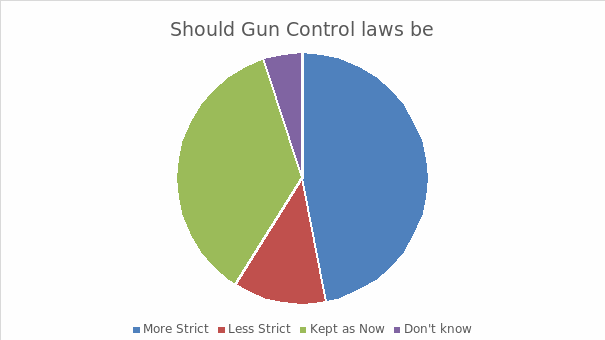
While there are background checks in place for gun purchases, they are not always effective, and people who have mental health issues or prior criminal convictions may still be able to acquire guns. Stricter gun laws would improve the effectiveness of background checks, thereby making it more difficult for people who are not supposed to have guns from obtaining them (Campbell 7). Measures to make gun laws more stringent include expanding and increasing the availability of accurate background check data, as well as instituting universal background checks for all gun transactions (Sanjurjo 6). Figure 1 below illustrates people’s perceptions of current gun laws, as reported by the CDC.
Objections and Counterarguments
One of the main objections to tightened gun control laws and policies is that they would violate the Second Amendment of the Constitution, which guarantees the right to bear arms. Advocates of gun rights often use this argument to oppose any attempts to limit access to firearms. However, it is essential to note that the Second Amendment was written in a specific historical context and has been interpreted differently over time.
While the Second Amendment does guarantee the right to bear arms, it is not an absolute right. The Supreme Court has held that the government can regulate gun ownership to protect public safety (Neufeld et al. 585). Additionally, the language of the Second Amendment itself implies that the right to bear arms is not unlimited, as it specifies that it is for a “well-regulated militia.” Legal gun owners’ Second Amendment rights can be protected while enforcing common-sense gun control measures.
Another objection to restrictive gun rights and legislation is that it would not effectively address the problem of gun violence. Proponents of this argument argue that criminals and other individuals who intend to harm others will find a way to obtain firearms regardless of any restrictions that may be put in place (Campbell 7). While it is true that some criminals may obtain guns through illegal means, it is also true that many gun-related deaths and injuries are the result of legal firearms falling into the wrong hands. By implementing stricter background checks and other regulations, citizens can help prevent these tragedies.
Another objection to stronger legal constraints on gun possession is that gun control does not work. Proponents of this view argue that gun control laws only disarm law-abiding citizens and do nothing to prevent gun violence (Sanjurjo 42). They point to cities like Chicago and Washington, D.C., which have strict gun laws but still experience high rates of gun violence, as evidence that gun control does not work (Neufeld et al. 585). Additionally, countries like Australia and the United Kingdom, which implemented strict gun control laws after mass shootings, have seen significant reductions in gun violence (Campbell 126). It is essential to implement a comprehensive approach to reducing gun violence that includes both gun control laws and other measures, such as increased mental health services and more substantial penalties for illegal gun sales.
Additionally, proponents of gun rights argue that criminals will still have access to guns, regardless of any laws or regulations that are put in place. They believe that it will only affect law-abiding citizens and that criminals will continue to obtain guns through illegal means. Although criminals will still be able to obtain firearms, stronger gun laws can help lower the quantity of firearms in circulation, making it more difficult for criminals to obtain them (Campbell 126). Additionally, enforcing existing gun laws and increasing penalties for illegal gun sales can deter people from selling guns to criminals. These objections have been summarized and illustrated in Figure 2 below.

Questions
One of the questions often raised about restrictive gun rights legislation is whether it would be effective in reducing gun violence. While it is true that there are no easy solutions to this complex issue, research has shown that there is a correlation between the number of guns in circulation and the number of gun-related deaths. Japan and Australia, which have stricter gun prohibitions than the United States, have lower rates of gun violence. While it may be challenging to eliminate gun violence, it is possible to reduce it through a combination of laws and policies.
Another question often raised about stricter firearms legislation and restrictions is whether it would infringe on individual freedoms. While it is essential to protect individual rights, it is also important to balance those rights with the greater good of society. In the case of gun violence, the harm caused by unrestricted access to firearms far outweighs the individual freedom to own a gun (Sanjurjo 51). By implementing common-sense regulations, we can help to protect both individual rights and public safety.
It is also essential to consider the level of restriction that is appropriate. Some advocates argue for a complete ban on all firearms, while others believe in more moderate restrictions, such as background checks, waiting periods, and limits on magazine capacity (Campbell 41). Finding the right balance between gun ownership rights and public safety is crucial and requires careful consideration and deliberation.
Another key question to consider is whether stricter gun rights and laws will help prevent mass shootings, which have become all too common in America. Proponents of stricter gun laws argue that they would make it more difficult for people who should not have guns to obtain them, such as those with a history of violence or mental illness. They also contend that measures like waiting periods and background checks can help curb violent outbursts. Opponents, however, argue that criminals and those intent on committing mass shootings will still be able to obtain guns illegally, rendering such laws ineffective. Figure 3 below shows a summary of the questions raised.

Opposing Viewpoints
One of the opposing viewpoints to more controlled access to guns and related legal measures is that it would not prevent mass shootings. Proponents of this argument point to the fact that many mass shooters obtained their weapons legally and that they would have found a way to obtain them even if stricter laws had been in place. While it is true that some mass shooters obtained their weapons legally, it is also true that many of them had a history of mental illness or domestic violence (Campbell 92). By implementing stricter background checks and red flag laws, we can help prevent these individuals from obtaining firearms and potentially causing harm to others.
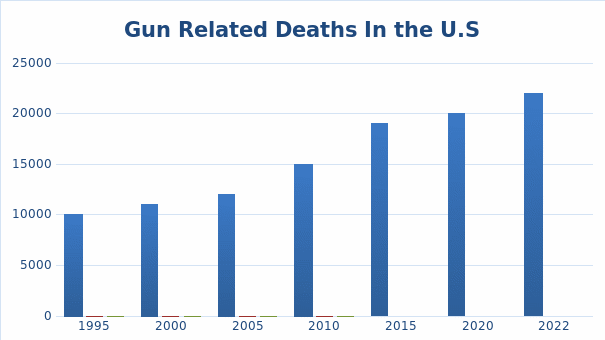
Another opposing viewpoint to restrictive gun rights and legislation is that it would be unfair to law-abiding gun owners. Proponents of this argument argue that most gun owners are responsible and law-abiding citizens who should not be punished for the actions of a few. While it is true that most gun owners are responsible and law-abiding citizens, it is also true that unrestricted access to firearms has contributed to a high rate of gun violence in America (Sanjurjo 50). A bar graph showing gun-related deaths based on data from the CDC is shown in Figure 4 below. By implementing common-sense regulations, such as background checks and restrictions on certain types of firearms, it can be ensured that only responsible gun owners can continue owning firearms.
Opponents of restrictive gun rights and legislation argue that it would be an unnecessary and costly burden on taxpayers. They point out that implementing such regulations would require additional resources and personnel, which would ultimately be paid for by taxpayers. However, it is essential to consider the cost of gun violence to society as a whole.
According to the CDC, there were over 43,000 gun-related deaths and injuries in the United States in 2021 (CDC). These incidents not only have a profound human toll but also have high economic costs, including medical expenses, lost wages, and reduced productivity. By implementing regulations that are designed to reduce gun violence, the government can help to mitigate these costs and create a safer and more prosperous society for all.
My Position
In summary, I support the idea of enhanced regulatory limits on firearm ownership. While I understand the objections and opposing viewpoints, I believe that reducing gun violence is an important goal that can be achieved through sensible measures such as waiting times, background checks, and bans on certain weapons. These measures may not prevent all types of gun violence, but they can certainly make a difference in the number of lives lost to guns.
One of the most significant reasons to support restrictive gun rights and legislation is the need to reduce gun violence. The United States has a higher rate of gun-related deaths and injuries than other developed countries, and the number of mass shootings in the country has risen dramatically in recent years (Campbell 126). While some may argue that these incidents are isolated events, they have become all too common in the United States, with devastating consequences for those affected. Stricter gun laws can help to reduce the frequency and severity of such incidents, as evidenced by the lower rates of gun-related deaths and injuries in countries with stricter gun laws.
Conclusion
In conclusion, implementing restrictive gun laws can reduce gun violence and save lives. Opponents of gun control argue that it infringes on individual liberties, would not prevent criminals from obtaining firearms, and would prevent law-abiding citizens from defending themselves. However, these objections can be addressed by recognizing the government’s authority to regulate firearms, making it harder for criminals to obtain firearms, and recognizing the risks associated with owning a firearm. Therefore, it is necessary to implement restrictive gun laws to address the public health issue of gun violence.
Works Cited
“CDC”. WISQARS—Web-based Injury Statistics Query and Reporting System, Centers for Disease Control and Prevention, 2021, Web.
Campbell, Donald J. America’s Gun Wars: A Cultural History of Gun Control in the United States. ABC-CLIO, 2019.
Neufeld, Miriam Y., et al. “State firearm laws and nonfatal firearm injury-related inpatient hospitalizations: a nationwide panel study.” Journal of trauma and acute care surgery vol. 92, no. 3, 2022, pp. 581-587. Web.
Sanjurjo, Diego. Gun control policies in Latin America. New York: Palgrave Macmillan, 2020.